
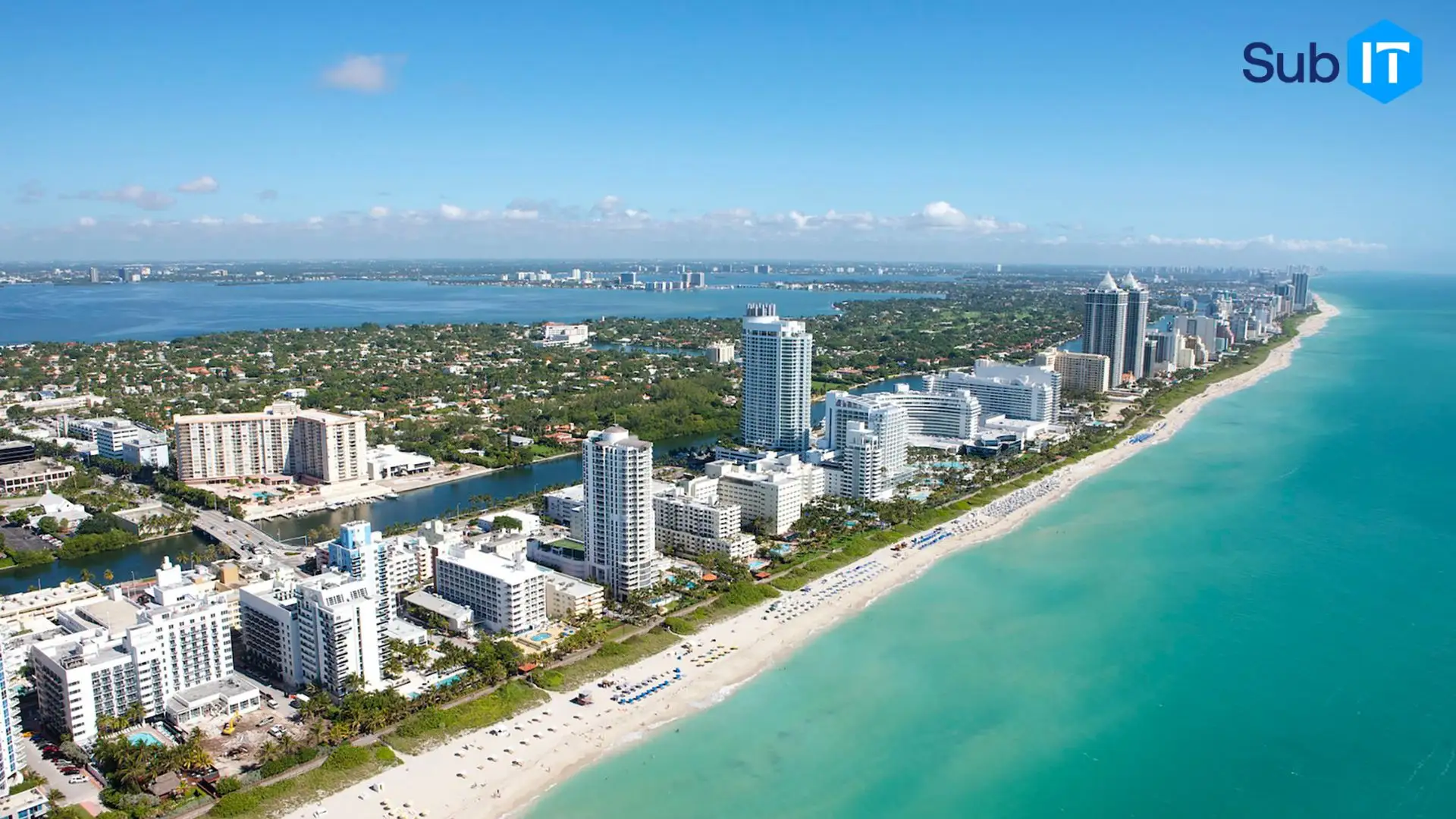
At SubIT Managed IT Services & Support, we deliver disaster recovery services to Miami businesses that cannot afford to lose access to their data, systems, or operations when something goes wrong.
Since October 2015, our team has helped Florida companies get back online fast after hardware failures, ransomware attacks, power outages, and storm-related disruptions.
With a 96%+ customer satisfaction score and a cybersecurity-first approach, we treat your recovery plan as a core part of keeping your business running.
Disaster recovery is the set of tools, backups, and procedures that restore your systems and data after an unexpected event. For a company juggling employees, vendors, and customers, that answer is the difference between a minor interruption and a multi-day shutdown.
According to IBM’s Cost of a Data Breach Report 2023, the average cost of a data breach has reached $4.45 million globally, a 15% rise over three years. Add South Florida’s hurricane season and the flooding risk that comes with it, and the pressure climbs higher.
A strong recovery plan pairs directly with proactive cybersecurity and cloud services, so your data stays protected and recoverable no matter what hits.
How RTO and RPO Targets Shape Your Miami Business Recovery Plan
Two numbers decide almost everything about your disaster recovery plan, your Recovery Time Objective (RTO) and your Recovery Point Objective (RPO). RTO is how long your business can be down before the outage does real damage. RPO is how much data you can afford to lose, measured in time since your last usable backup.
These targets are a direct financial calculation. According to Gartner, the average cost of IT downtime is $5,600 per minute, so every minute you shave off your RTO has a dollar value attached to it.
Regulated Miami industries often have no choice. Healthcare (HIPAA), finance (SOX), and maritime logistics frequently carry contractual or regulatory RTO and RPO requirements you must document and meet.
The right answer is tiered recovery, where your most important systems get aggressive targets and lower-priority systems get relaxed ones.
Disaster Recovery Services We Provide to Miami Businesses
- Business continuity planning (BCP)
- Backup-as-a-Service (BaaS)
- Disaster Recovery-as-a-Service (DRaaS)
- Cloud failover and replication
- On-premises backup architecture
- DR testing and tabletop exercises
- Ransomware recovery planning
- Bare-metal restore
- Virtual machine replication
- Network redundancy design
- Documentation and runbook creation
- Post-incident review
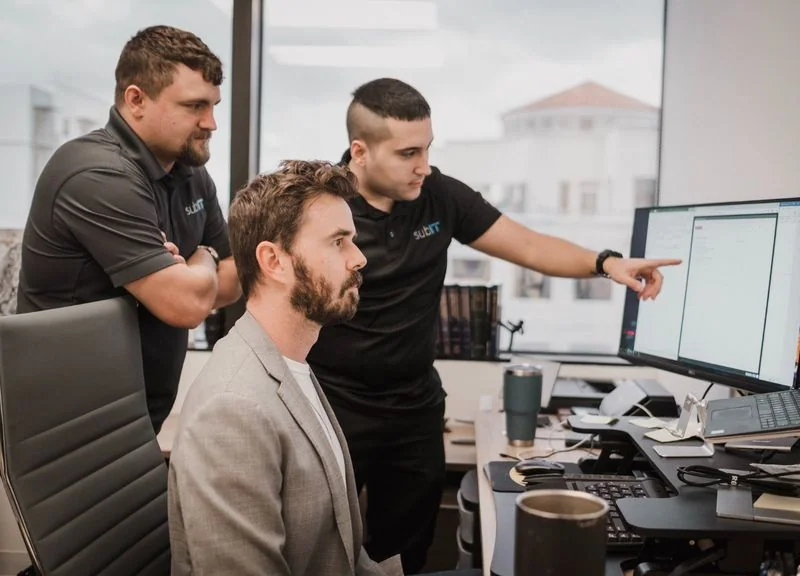
Get Trusted IT Support Today
For straightforward IT advice, contact Managed IT Services & Support in Miami | SubIT. Call (305) 239-8768 to schedule your consultation.
Why Miami Companies Trust SubIT for Disaster Recovery
Cybersecurity and recovery under one roof
Ransomware is now a leading trigger for disaster recovery events, so our cybersecurity-first approach unifies prevention and recovery instead of treating them as separate problems.
A 96 percent plus satisfaction score
Our CSAT rating comes from post-ticket surveys and is published as an ongoing benchmark, so you see proof of execution quality, not promises.
Consistent ownership of your recovery plan
Exceptionally low technician turnover means the same people who wrote your recovery runbook are the ones executing it when it matters.
Enterprise-grade protection without in-house cost
You get a fully tested recovery capability across all your Miami locations and remote teams, without the overhead of a dedicated internal team.
What Miami Businesses Get Wrong About Downtime Costs
Most owners calculate downtime as lost sales per hour and stop there. The real cost sits in the expenses that keep stacking while systems are dark.
According to the Federal Emergency Management Agency (FEMA), approximately 40% of small businesses never reopen after a disaster, and another 25% fail within one year. Miami businesses routinely underestimate the true long-term cost of downtime.
The hidden costs owners miss:
Employee idle time, where staff are paid to wait while nothing functions.
- Emergency vendor fees and rush charges to restore systems under pressure.
- Regulatory penalties for missed SLA commitments or compliance breaches.
- Manual workaround labor and the hours spent rebuilding lost data by hand.
In hospitality, real estate, international trade, and healthcare, one outage can break client trust that took years to build. A missed shipment window at the Port or a downed booking system during peak season carries consequences long after the systems come back.
The most dangerous gap is the one between the backup you think you have and the recovery you can actually prove. Untested backups fail exactly when they matter most. A tested recovery plan is what separates a temporary disruption from a permanent closure.
About SubIT Managed IT Services & Support
Since October 2015, SubIT has operated as a true extension of the businesses it serves across Miami, Florida, and nationwide. SubIT functions as a long-term partner focused on stability, security, and keeping operations running without interruption.
SubIT delivers enterprise-level IT support, cybersecurity, and infrastructure management without the cost of building an in-house team. That model gives Miami businesses access to serious technical depth while keeping overhead predictable.
According to Grand View Research, the U.S. managed services market was valued at $267.3 billion in 2022 and is growing at a CAGR of 13.6% through 2030, reflecting how heavily businesses now rely on providers like SubIT for IT and disaster recovery support.
SubIT is built to support organizations with hundreds of employees across multiple locations and every U.S. time zone. Ongoing training, paid certifications, and performance bonuses keep technician turnover low, which means the people who know your environment stay with your account.
Our Disaster Recovery Process
1. Risk and Business Impact Assessment
We identify your critical systems, map their dependencies, quantify what downtime actually costs your business, and audit your existing backups.
2. RTO and RPO Definition
We set clear recovery time and recovery point objectives that match your tolerance for downtime and any compliance mandates you must meet.
3. DR Architecture Design
We select backup tiers, replication targets, cloud or hybrid failover paths, and network redundancy suited to your environment.
4. Implementation
We deploy backup agents, configure replication, build your failover environment, and document runbooks your team can follow.
5. DR Testing
We run scheduled simulated failovers and tabletop exercises, then validate recovery times against your objectives.
6. Ongoing Monitoring and Maintenance
We run continuous backup health checks, integrate DR into change management, and review the plan annually or after any major event.
7. Incident Response and Recovery Execution
When disaster hits, we activate the plan, follow communication protocols, sequence the restoration, and run a full post-incident analysis.
Frequently Asked Questions About Disaster Recovery in Miami
How long does it actually take to restore our systems after a ransomware attack, and can we lose data permanently?
Recovery time depends entirely on how your backups and disaster recovery plan were built before the attack. With a tested plan and clean, isolated backups, most small businesses can restore their systems within hours to a day or two. Without that, recovery can stretch into weeks, and some data may be lost permanently if backups were connected to the infected network.
Does disaster recovery cover hurricane-related outages, or is that a separate thing?
Yes, hurricane outages are one of the main reasons Miami businesses invest in disaster recovery. A proper plan covers power loss, flooded server rooms, damaged hardware, and internet blackouts, not only cyberattacks. Because Miami-Dade sits in a high-risk hurricane zone, your data and applications should be replicated to a geographically separate data center outside the storm’s path.
What is the real difference between a backup and a disaster recovery plan?
A backup is just a copy of your data. A disaster recovery plan is the full playbook for getting your entire business running again, including how fast, in what order, and from where.
How often should we test our disaster recovery plan? Is once a year enough?
Once a year is the bare minimum, and for most businesses it is not enough. A plan that has never been tested under real conditions almost always fails when you need it, because staff, systems, and vendors change constantly. We recommend testing recovery scenarios at least twice a year, plus after any major infrastructure change.
We already use cloud storage like Microsoft 365 or Google Workspace. Do we still need disaster recovery?
Yes, and this is a dangerous assumption. Cloud providers protect their infrastructure, not your data from accidental deletion, ransomware, or a compromised account. Microsoft and Google both operate on a shared responsibility model, meaning recovering your own data is your responsibility, not theirs.
What compliance frameworks require a formal disaster recovery plan, like HIPAA, SOC 2, or PCI-DSS?
Most major frameworks require documented, testable recovery capabilities. HIPAA requires a data backup and contingency plan for any Florida business handling protected health information. SOC 2 and PCI-DSS both expect proof that you can recover systems and protect data after an incident.
How much does disaster recovery as a service cost for a small Miami business?
Pricing scales with how much data you protect and how fast you need to be back online. Most small Miami businesses find that a managed recovery service costs far less than a single day of downtime, which can run into thousands in lost revenue.
What happens if our Miami office is physically inaccessible after a storm? Can we still operate?
Yes, that is exactly what a strong disaster recovery plan is designed for. When your data and applications are replicated to an offsite data center, your staff can securely access everything from home, a temporary space, or any location with internet. This matters in Miami, where flooding, evacuation orders, or building damage can lock you out of your office for days or weeks.
What Miami Businesses Say About SubIT
“Very knowledgeable… managing our network, cloud backups, new equipment, and cybersecurity.” – Daniel M.
Recovery only works when the backups are solid before a crisis hits. Daniel highlights the technical range that keeps a business protected end to end.
“They really helped us improve our cybersecurity to make sure we were following the right protocols.” – Kristine S. Q.
Strong protection and clear protocols are what stop a small problem from becoming a shutdown. This reflects SubIT’s prevention-first approach.
“They took the time to understand our business requirements and provided tailored solutions.” – Kristine S. Q.
A partner who already knows your environment can act faster when something breaks. That familiarity is the difference between a quick recovery and a long outage.
“Felt like having a dedicated chief strategist on board.” – Briana M.
Enterprise-level support without the overhead, and exactly what a growing Miami business needs when the pressure is on.
Local Resources in Miami for Business Continuity and Disaster Preparedness
- Miami-Dade Office of Emergency Management
Coordinates county-wide preparedness, response, and recovery planning for declared emergencies. - Florida Division of Emergency Management
State agency overseeing disaster declarations, federal aid coordination, and recovery programs. - FEMA Region 4 Office
Federal office administering individual and public assistance grant programs following presidentially declared disasters. - Miami-Dade Building Department
Issues permits, conducts inspections, and enforces construction codes for damaged property repairs. - Miami-Dade Property Appraiser
Maintains official property records and assessed values used in loss and damage calculations. - Miami-Dade Office of the Tax Collector
Handles property tax records relevant to ownership verification and post-loss financial obligations. - Miami-Dade Public Works Department
Manages infrastructure repair and right-of-way restoration following storm or flood events.
Protect Your Miami Business Before the Next Disruption Hits
Hurricane season, tropical storms, flood risk, and an aging power grid put Miami businesses under pressure the rest of the country never sees. The businesses that stay running through disruption are the ones that prepared before the storm, not the ones scrambling after systems go dark.
With offices in Coral Gables and Miami, SubIT works as a ready-now extension of your team, not a vendor you call once the damage is done.
Do not wait for the next outage to find out where your business is exposed. Schedule a free assessment with SubIT and get a clear picture of what it takes to keep your Miami business protected and running.